Source Living Container for Dormitories, Offices, and Warehouses
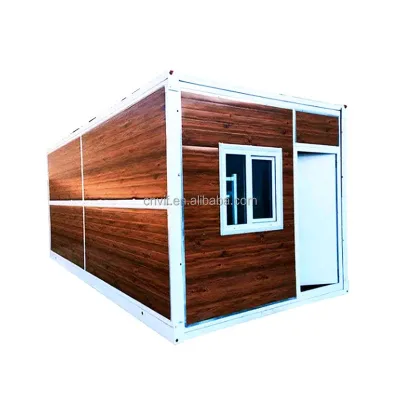
Explore 30 available living container options featuring steel frames, sandwich panels, and customizable designs. Buyers can compare specifications for dormitories, temporary offices, and warehouse applications with fast installation and wind resistance.
Key considerations
Products List




Comprehensive Sourcing Guide
Strategic Sourcing Guide for Living Container Solutions
The global demand for modular living solutions has accelerated, driven by the need for rapid deployment, cost efficiency, and sustainable construction practices. For procurement professionals, the "living container" represents a complex category encompassing prefabricated homes, temporary dormitories, and modular housing units. Sourcing these units requires a disciplined approach that balances technical specifications with compliance verification. This guide outlines the critical factors buyers must evaluate when engaging with suppliers of steel structure and sandwich panel-based living containers, ensuring that procurement decisions are grounded in verified data rather than marketing assertions.
Technical Specifications and Structural Integrity
The foundation of any reliable living container lies in its structural composition. Based on observed market data, the primary material for these units is typically a steel structure, often utilizing pillars with a thickness of 2.3mm or up to 3mm for enhanced load-bearing capacity. The framing system is critical for resisting environmental stresses, including wind and seismic activity. Buyers should verify that the steel frame meets specific thickness requirements, as variations in gauge can significantly impact the unit's longevity and safety.
The wall assembly is another pivotal technical component. The most common configuration involves sandwich panels, which may be constructed from Rock Wool, EPS (Expanded Polystyrene), or PU (Polyurethane) cores. These panels typically range from 50mm in thickness, providing necessary thermal insulation and structural rigidity. The choice of core material directly influences the unit's fire resistance and thermal performance. For instance, Rock Wool offers superior fire resistance, while EPS and PU provide varying degrees of thermal efficiency. Procurement teams must confirm the specific core material used, as this dictates the unit's suitability for different climates and usage scenarios.
Flooring systems also vary, with options including MGO (Magnesium Oxide) Board or Cement Board. These materials must be durable enough to support daily residential or commercial loads while maintaining moisture resistance. The connection methods, typically utilizing screws and bolts, ensure that the modular components can be assembled and disassembled efficiently. When evaluating technical specs, buyers should look for standardized dimensions, such as 300059502800mm or customized sizes, to ensure compatibility with site logistics and foundation requirements.
Compliance, Certification, and Safety Standards
Navigating the regulatory landscape is essential for international procurement. While specific certification statuses can vary by supplier, the industry standard for reputable living container manufacturers often includes ISO and CE certifications. These marks indicate adherence to international quality management systems and safety standards, respectively. Buyers must request current certification documents to verify that the supplier's production facilities and specific product lines meet these criteria.
Safety performance is a non-negotiable aspect of living container sourcing. Key performance indicators include wind resistance and earthquake resistance levels. Data from the market suggests that high-quality units can withstand wind forces up to Level 16 and seismic activity up to Level 8. Additionally, fire resistance is a critical metric, with some units offering a refractory rating of 90 minutes. These figures are not universal; they depend heavily on the specific materials used in the sandwich panels and the steel frame thickness. Procurement professionals should demand third-party test reports that validate these specific performance claims for the exact model being purchased.
Furthermore, environmental standards play an increasing role in procurement decisions. Features such as eco-friendliness, moisture proofing, and leak proofing are often highlighted in product descriptions. However, buyers should verify these claims against recognized environmental standards rather than relying solely on supplier marketing. The presence of an ISO certification often serves as a proxy for a supplier's commitment to consistent quality and environmental management, but direct verification of the specific standard (e.g., ISO 9001) is necessary to ensure compliance.
Cost Drivers and Pricing Dynamics
The pricing of living containers is influenced by a complex array of factors, ranging from raw material costs to logistical expenses. The observed price range in the market is exceptionally broad, spanning from $0.20 to $40,000 USD. This variance is not indicative of product quality alone but reflects differences in size, customization, material quality, and included features. A basic, small-scale unit will naturally fall at the lower end of this spectrum, while fully customized, multi-bedroom modular homes with premium finishes will command prices at the higher end.
Material costs are a primary driver. The choice between Rock Wool, EPS, and PU sandwich panels significantly impacts the final price. Rock Wool, being more fire-resistant and durable, typically commands a higher price point than EPS. Similarly, the thickness of the steel frame and the type of flooring material (MGO vs. Cement Board) contribute to cost variations. Customization is another major cost factor. While many suppliers offer "Available" customization, the extent of this customization—such as unique dimensions, specific color schemes (e.g., RAL colors), or interior fit-outs—will directly increase the unit cost.
Logistics and packaging also play a substantial role in the total cost of ownership. Some units are designed for flat-pack shipping to maximize container utilization, while others may be shipped as fully assembled or semi-assembled units. The packing method, whether "Load Into 40FT Container with Proper Packing" or "Water Proof" packaging, affects shipping efficiency and potential damage risks. Buyers must calculate the total landed cost, including freight, insurance, and customs duties, rather than focusing solely on the ex-works price. The Minimum Order Quantity (MOQ) also influences unit economics, with ranges observed from 1 to 250,000 units. Larger orders often benefit from economies of scale, reducing the per-unit cost significantly.
Typical Applications and Usage Scenarios
Living containers are versatile structures designed to meet a wide spectrum of needs. Their primary applications include temporary offices, dormitories, and construction camps. In these scenarios, the ability to deploy housing quickly and efficiently is paramount. The modular nature of these units allows for rapid assembly, making them ideal for emergency relief efforts or temporary workforce housing in remote locations.
Beyond temporary use, these containers are increasingly utilized for permanent or semi-permanent residential purposes. Applications such as apartments, hostels, and school housing demonstrate the adaptability of the technology. The design style often leans towards modern aesthetics, with options for 1 to 4 bedrooms, catering to various occupancy needs. For industrial applications, living containers serve as workshops, warehouses, and storage containers, leveraging their durability and weather resistance.
The specific usage dictates the required specifications. A unit intended for a hospital or school may require higher fire resistance and sound insulation properties (e.g., ≥30dB) compared to a temporary office. Buyers must align the technical specifications with the intended application to ensure the unit meets the functional and regulatory requirements of the end-use environment. The "Fast Installation" feature is particularly valuable in these contexts, minimizing downtime and accelerating project timelines.
Supplier Evaluation and Operational Capabilities
Selecting the right supplier is as critical as evaluating the product itself. Buyers should assess the supplier's production capacity and lead times. Observed productivity rates, such as 30 sets per month, provide insight into a supplier's ability to fulfill large orders. However, this figure should be contextualized against the order size and the complexity of the customization required. A supplier with a high production rate may still face bottlenecks if the order involves extensive customizations or if raw material supply chains are disrupted.
Geographic location is another factor to consider. Suppliers are often located in manufacturing hubs such as Henan, Hebei, or Taiyuan in China. Proximity to ports and logistics infrastructure can influence lead times and shipping costs. Buyers should verify the origin of the products and the supplier's experience in exporting to their specific region. The ability to handle international logistics, including proper packing and documentation, is essential for a smooth procurement process.
OEM (Original Equipment Manufacturer) capabilities are also important for buyers seeking branded solutions. Many suppliers offer OEM services, allowing clients to customize the branding and design of the living containers. However, buyers must ensure that the supplier has the technical expertise to maintain quality standards while implementing custom designs. The availability of customization, including specific colors and dimensions, should be confirmed during the initial engagement to avoid misunderstandings later in the process.
Quality Control and Long-Term Procurement Considerations
Ensuring consistent quality requires a robust quality control (QC) strategy. Buyers should implement a multi-stage QC process, including pre-production sample approval, in-process inspections, and final pre-shipment inspections. Key quality metrics to monitor include the integrity of the steel frame, the uniformity of the sandwich panels, and the precision of the connections. The warranty period, often cited as 1 year, is a critical indicator of the supplier's confidence in their product. However, buyers should clarify the scope of the warranty, including what is covered and the process for claims.
Long-term procurement considerations extend beyond the initial purchase. Buyers should evaluate the supplier's ability to provide after-sales support, including spare parts availability and technical assistance. The modularity of living containers means that units may need to be expanded, relocated, or modified over time. A supplier that offers flexible reconfiguration services adds significant value to the procurement relationship. Additionally, the environmental impact of the materials used should be considered, with a preference for suppliers who prioritize eco-friendly and recyclable materials.
The durability of the units in harsh environments is another long-term concern. Features such as wind resistance, earthquake resistance, and thermal insulation are not just initial selling points but long-term performance indicators. Buyers should request historical data or case studies demonstrating the performance of similar units in comparable environments. This evidence-based approach helps mitigate the risk of premature failure and ensures that the investment delivers value over its intended lifespan.
Conclusion
Sourcing living containers is a multifaceted process that requires a deep understanding of technical specifications, compliance requirements, and market dynamics. By focusing on verified data and avoiding unconfirmed claims, procurement professionals can make informed decisions that align with their organizational goals. The broad range of available options, from basic temporary offices to fully customized residential units, offers significant flexibility. However, this flexibility comes with the responsibility of rigorous evaluation. Buyers must prioritize structural integrity, safety certifications, and supplier reliability to ensure that their investment in living container solutions is both safe and sustainable. Through a disciplined approach to sourcing, organizations can leverage the efficiency and adaptability of modular living spaces to meet their evolving needs.
FAQs
What materials are used for the steel frame and walls?
The steel frame typically uses 2.3mm to 3mm thickness steel pillars. Walls are constructed from 50mm sandwich panels featuring Rock Wool, EPS, or PU cores for thermal insulation.
Which certifications do these living containers usually hold?
Most units carry CE and ISO certifications to verify compliance with international quality and safety standards. Buyers should request current documents to confirm specific model adherence.
How fast can these modular units be installed on site?
These living containers feature fast installation capabilities to minimize project downtime. The modular design allows for quick assembly using screws and bolts without complex on-site construction.
Can I customize the dimensions and color of the unit?
Customization is available for dimensions like 3000*5950*2800mm and RAL color schemes. Suppliers offer tailored solutions for specific site logistics and aesthetic requirements.
What is the standard warranty period for these structures?
The standard warranty period provided is typically one year. This coverage ensures basic quality assurance, though specific terms may vary by supplier and model.
Which applications are suitable for these prefabricated living containers?
These units are suitable for dormitories, temporary offices, hospitals, and workshops. They also serve as permanent residential apartments or hostels with 1 to 4 bedrooms.